Why the landlords best placed to expand are choosing not to


On paper, the strongest candidates for expansion are easy to identify. They have low borrowing, substantial equity and established portfolios. They understand the market, have access to finance and, in many cases, have already proven their ability to grow successfully. If anyone were expected to continue expanding, it would be them, yet that is not what is happening.
A growing number of these landlords are choosing not to take the next step. The capacity is there, the experience is there, but the intent has shifted. That shift is important because it suggests that the limiting factor is no longer financial, it is strategic. Expansion always comes with trade-offs. More properties mean more exposure, more moving parts and more complexity. For landlords who have already reached a level of financial stability, those trade-offs are being reassessed. The question is no longer whether growth is possible; it is whether it is necessary. This is where the decision-making process changes. Instead of pursuing additional acquisitions as a default, landlords are becoming more selective. They are weighing the benefits of further growth against the value of maintaining what they already have.
Evidence of this can be seen in the Property118 Landlord Sentiment Survey Q1 2026, where many landlords report strong financial positions alongside a limited appetite for expansion.
That combination is not accidental, it reflects a market where capability and intention are no longer aligned. When the landlords best placed to expand choose not to, the effect is felt across the sector. Growth slows, competition for new acquisitions softens and the overall pace of activity becomes more measured. This is not a lack of opportunity, iIt is a shift in priorities.
For now, one conclusion stands out: the landlords with the greatest ability to grow are increasingly the ones deciding they no longer need to.
For many landlords, the question is not whether the market is changing, but what that change means for their own position.
If you are holding a portfolio with relatively low borrowing, or are beginning to reassess how your assets are structured, this is often the point where a more joined-up view becomes useful.
An invitation for established landlords
If you find the Property118 articles helpful and are curious about how those ideas apply to your own portfolio, you are welcome to take the conversation a step further.
These conversations are typically most useful for landlords with established portfolios and relatively modest borrowing who are beginning to reflect on how their assets could work more effectively in the years ahead.
From there we can arrange a free introductory discussion to explore how your portfolio works as a whole and what that might mean for the years ahead.
|
★★★★★
|
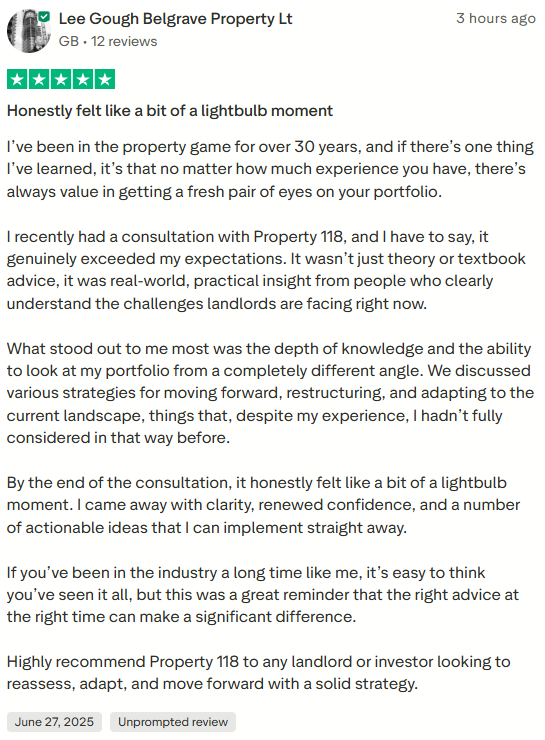
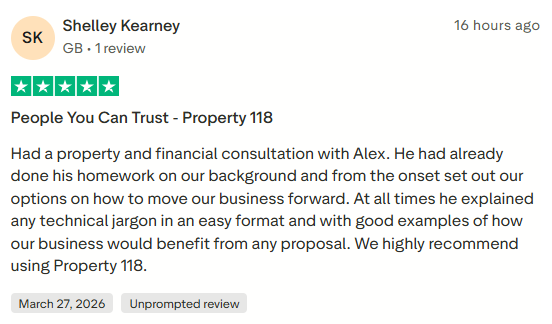
Help other landlords find Property118If you have found Property118 useful, a short Trustpilot review would make a meaningful difference. It helps other landlords decide whether our research is worth following. |
Have Your Say
Every day, landlords who want to influence policy and share real-world experience add their voice here. Your perspective helps keep the debate balanced.
Not a member yet? Join In Seconds
Login with