

Renters’ Rights Bill will shrink the student rental market, warns Propertymark
2 years ago | 2 comments


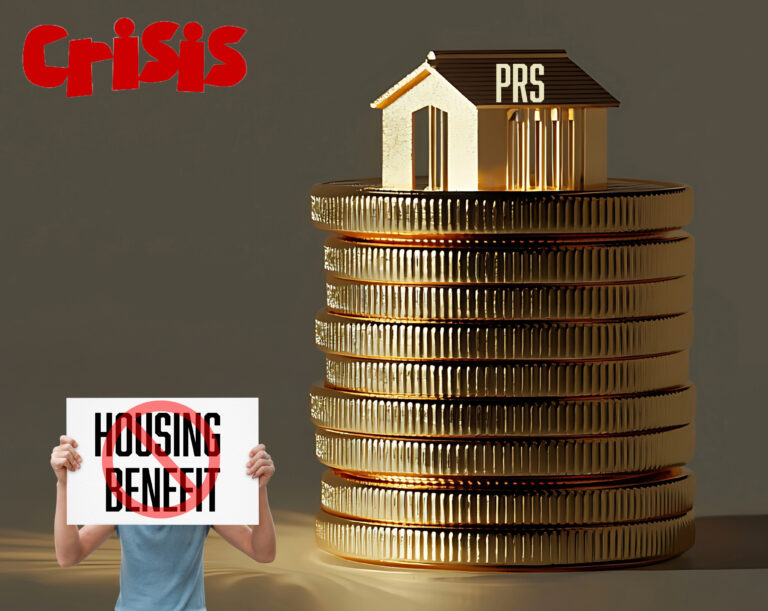
Just 2.5% of the private rented properties in England are within reach for tenants relying on housing benefit, research from Crisis reveals.
The charity says the figure, drawn from data between April and October 2024, paints a grim picture of affordability.
It says the proportion has dropped significantly from 12% in 2021-22, even after a boost by then-Chancellor Jeremy Hunt in April 2024.
The situation across Great Britain is slightly worse as only 2.7% of listed PRS homes meet the financial capacity of those on benefits.
Matt Downie, the chief executive at Crisis, said: “This isn’t just a difficult situation for private renters on low incomes, it’s an impossible one.
“In every local area, housing benefit is supposed to cover the lowest third of rents in the private sector. We are currently nowhere near that.”
He added: “There is no doubt that today’s freeze on housing benefit will lead to rising homelessness.
“It also risks completely overwhelming local authorities who are already struggling to cope with the demand for support and will leave more people stuck in unfit temporary accommodation that damages their health and wellbeing.”
The research from Zoopla and Health Equals highlights the widening disparity, showing households must cover an extra £337 monthly for a one-bedroom, £326 for a two-bedroom and £486 for a three-bedroom property on average, compared to benefit levels.
To compound the issue, a nationwide freeze on housing benefits took effect on 1 April, slashing real-term support for 5.7 million households.
This freeze, lasting until 2026, heightens the risk of rent arrears, financial strain and potential homelessness, Crisis says and will place pressure on local councils.
Councils have seen temporary accommodation costs soar to £2.3 billion from April 2023 to March 2024.
Over the past decade, private sector rents in England have climbed by 45%, with the average monthly rent reaching £1,381 in the year to February.
This surge coincides with a record 126,040 households, including more than 164,000 children, living in temporary housing — the highest ever recorded.
The charity warns that such short-term fixes are stretching local authorities to their limits.
Crisis is now pushing for linking benefits to escalating rents to curb poverty and homelessness while enhancing public health.
Zoopla’s Richard Donnell said: “Growing the number of homes in the private and social rented sector is the only way to alleviate the lack of supply and affordability challenges facing the nation’s renters.
“The number of homes in rented tenures has been static for over a decade, yet demand has boomed pushing rents higher, squeezing those on lower incomes.
“The government needs to encourage landlords to remain in the market and continue investing in growing supply while ensuring there is demand from housing providers to buy new build affordable homes for social and affordable rent to support the target for 1.5m new homes.”
He adds: “It’s also vital that housing benefit is uprated so that we maintain the link with rent levels to stop more people being forced from the private rented sector into homelessness.”
2 comments on this article
A different perspective could help you spot an issue, avoid a mistake or find a better way forward. Read the comments and add your own views if you wish.
2 years ago | 2 comments

2 years ago

2 years ago | 24 comments
Member Since September 2024 - Comments: 119
10:29 AM, 2nd April 2025, About 2 years ago
I’m not a charity, so I’m not that fussed that people on benefits can’t afford my properties – there are plenty of working people who can.
I wonder what proportion of people can’t afford a new Rolls Royce, and instead have to rely on public transport?
Member Since April 2021 - Comments: 104
12:37 PM, 2nd April 2025, About 2 years ago
Yes, this outcome was all too obvious as policy shrinks the PRS supply against increasing rental demand, but the benefits system is flawed. It’s perverse that “in every local area, housing benefit is supposed to cover the lowest third of rents in the private sector”. The government should not be paying rents to claimants to live in high cost housing in major cities and certain areas of the country.