

Half of homes in England and Wales fail EPC C targets
7 months ago | 6 comments


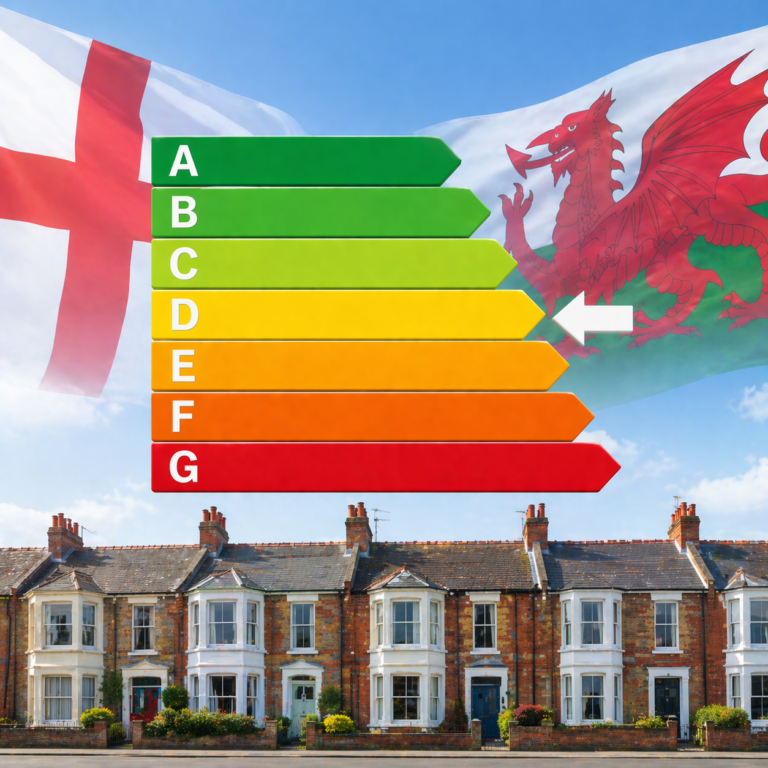
More than half of homes across England and Wales fall into lower energy efficiency bands, with 55% of properties rated D or below, research reveals.
The data highlights the distribution of EPC scores ahead of planned changes to how energy performance in homes is measured.
Emperor Paint found the figures from the Department for Levelling Up, Housing and Communities show a clear skew towards lower bands.
EPC scores run to 100, with band D covering 55 to 68, while E, F and G signal weaker insulation and less efficient heating systems.
The firm’s Jack Reading said: “Changes to energy performance certificates mean that they will now be based on how properties retain heat, rather than how much energy a property uses.
“Without accounting for how walls perform in real, weather-exposed conditions, EPC scores risk overlooking a key factor influencing heat loss.”
He added: “As climate pressures intensify, this gap is only set to widen, meaning properties could appear more energy efficient on paper than they are in practice, an issue that is particularly significant given the UK’s ageing housing stock.”
At the top of the EPC list is the Isles of Scilly which records 84.97% of homes in bands D to G, a total of 1,102 properties.
Gwynedd follows at 74.32%, or 42,721 homes, with Pendle close behind on 74.05%, accounting for 35,686 properties.
Elsewhere, Ceredigion reaches 72.97%, Castle Point 72.59%, and Blackpool 72.04%.
Barrow-in-Furness and Hyndburn both sit above 71%, while Eden and Copeland exceed 70%.
Bradford shows 187,403 homes rated D or below, representing 66.98% of stock.
The lowest EPC band for rented homes currently is E, though that benchmark is set to rise.
From 1 October 2030, tenancies will be expected to meet an equivalent of band C, with earlier structural changes to the system arriving before then.
A revised EPC framework will be introduced this year, becoming mandatory from 1 October 2029.
The changes will now be based on how properties retain heat, rather than how much energy a property uses.
The new system, the Home Energy Model (HEM), will measure the following:
1 comment on this article
A different perspective could help you spot an issue, avoid a mistake or find a better way forward. Read the comments and add your own views if you wish.
7 months ago | 6 comments

7 months ago | 68 comments

7 months ago
Member Since August 2013 - Comments: 53
6:04 PM, 25th April 2026, About 6 months ago
I have a mix of A-Es and as soon as this is operational I will put some of my below C properties through it and see what difference it makes