

2) Why low gearing does not always mean low complexity


For many landlords, reducing borrowing has long been a sign that the portfolio is moving in the right direction. Debt falls, equity rises, refinancing pressure eases, and the business begins to feel more stable. After years of acquisition, management and lender negotiations, that can feel like a significant achievement, and rightly so.
Among experienced Property118 readers, this is often the stage where a portfolio begins to look mature. Loan-to-value ratios may have fallen below 40%, rental income is more predictable, and the sense of financial vulnerability that often comes with higher gearing has started to fade.
On the surface, that sounds like the point at which complexity should begin to reduce, but in practice, the opposite is often true.
The comfort of low debt
There is a good reason why landlords value low gearing. It usually means lower exposure to interest rate shocks, more breathing space in the monthly cash flow, and greater resilience when lenders tighten criteria or markets become less predictable. A portfolio with modest borrowing is generally easier to hold through uncertainty than one that is heavily financed.
That sense of security matters. It creates options, time and flexibility. It also allows landlords to make decisions from a position of relative strength rather than financial pressure, yet one of the interesting features of low-geared portfolios is that they often create a very different type of strategic challenge. The issue is no longer simply how to keep the business stable; the issue becomes what that stability is actually for.
When fewer pressures create more questions
Highly geared portfolios tend to force decisions: refinance deadlines, lender stress tests, interest costs and cash flow pressures make it obvious where attention is needed. Low-geared portfolios are different, and because the business is performing well, there is often no obvious trigger to step back and examine the wider picture. That can be deceptive.
When a landlord has substantial equity, stable income and relatively little lender pressure, the number of possible future directions tends to increase rather than shrink. The portfolio may be working perfectly well on a day-to-day basis, but that does not necessarily mean it is aligned with the owner’s longer-term priorities. That is often the point where the strategic questions become more nuanced.
Questions that are easy to postpone
Once a portfolio is established and borrowing is modest, landlords often begin to encounter a different kind of uncertainty. It is quieter than the pressures of the growth years, but no less important.
Is the current structure still the right one for the next twenty or thirty years?
Should some equity remain where it is, or should it start serving a different purpose?
Does a stable portfolio automatically mean an efficient one?
What happens when I/we no longer want or are no longer capable to manage everything personally?
These are not the sort of questions that tend to arrive with a deadline attached. There is no lender chasing a response and no urgent acquisition to secure. That is precisely why they are so often left unexplored. The portfolio keeps functioning, so attention stays on operations rather than direction.
Success can conceal inefficiency
One of the more interesting patterns among mature portfolios is that success itself can conceal issues that are not immediately visible. The landlord sees low debt, healthy rents and strong equity. All of those are positive, yet underneath that stability there may still be unanswered questions about future income, liquidity, family involvement, control, succession or overall purpose. This is not to say that something is wrong. In many cases the portfolio has been managed extremely well. The point is simply that a portfolio built for one phase of life may not automatically be optimised for the next. That distinction matters.
The strategy that helped a landlord acquire and hold property successfully over twenty or thirty years may not be the same strategy that best supports later-life priorities, family considerations or a gradual shift away from active management.
Why this stage is often misunderstood
There is a common assumption that complexity belongs mainly to landlords with high debt, rapid expansion plans or distressed portfolios. That is understandable, because those situations appear more demanding from the outside, yet complexity does not only arise from financial strain, it can also arise from financial success.
A landlord with one or two modestly financed properties may have relatively few strategic choices to make, wheras a landlord with a larger portfolio, strong equity and low gearing may have many more. There may be more assets, more possible routes forward, more family considerations, and more consequences attached to getting the next decisions wrong. In that sense, low gearing can reduce risk in one area while increasing the importance of judgement in another.
A stage that deserves more thought
Many of the more thoughtful conversations we have with experienced landlords begin at exactly this point. The portfolio is not in trouble and there is no crisis to solve. The landlord is simply beginning to recognise that a mature property business raises different questions from those that existed during the building phase. Some are thinking about retirement and future income while others are thinking about control, succession, or how to create flexibility without disrupting assets that have taken decades to build. In each case, the starting point is the same: understanding the portfolio properly before drawing conclusions about what should happen next.
In the next article in this series, I will look at another issue that often emerges once a portfolio reaches maturity: why stability and flexibility are not always the same thing.
An invitation for established landlords
If you have an established portfolio, modest borrowing and a growing sense that the next phase of your property business may require a different kind of thinking, we are happy to take a look at your position.
BOOK A CONSULTATION
These conversations tend to be most useful for landlords with established portfolios and relatively modest borrowing who are beginning to reflect on how their assets could work differently in the years ahead.
|
★★★★★
|
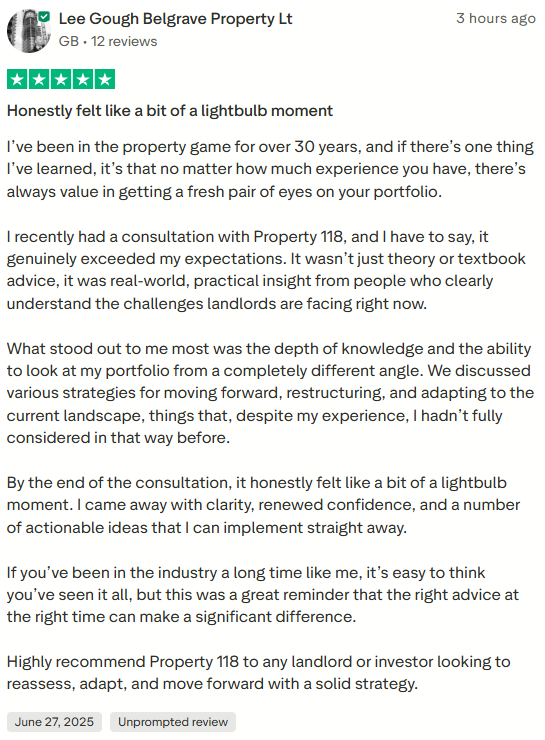
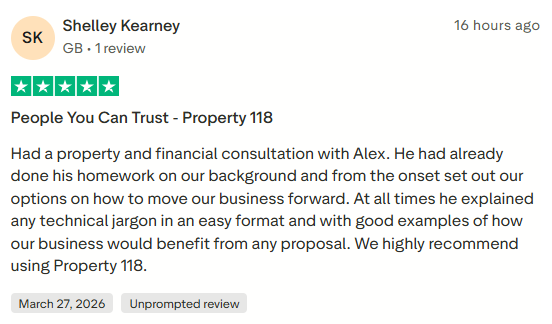
Help other landlords find Property118If you have found Property118 useful, a short Trustpilot review would make a meaningful difference. It helps other landlords decide whether our research is worth following. |
1 comment on this article
Learn from your peers’ experience
A different perspective could help you spot an issue, avoid a mistake or find a better way forward. Read the comments and add your own views if you wish.
Previous Article
1) When the portfolio is built, what comes next?Next Article
3) When stability and flexibility begin to diverge
Member Since January 2024 - Comments: 436
2:59 PM, 3rd June 2026, About 5 months ago
The decision nowadays is quite easy, especially having seen the levels of fines that now apply to minor transgressions and enthusiasm of councils to levy fines at every opportunity.
Sell up and invest elsewhere!