


The £7,000 hazard penalty will be decided by your records, not just your property

 by Tauhid Islam
8:59 AM, 23rd July 2026, 2 months ago
Categories:
Most readers will have seen the coverage of the new £7,000 penalty for Category 1 hazards. What has had far less attention is how the penalty is actually decided once a council officer has been through the property, and what the government’s new landlord and agent guide, published on 23 June 2026, actually asks of landlords.
Read the legislation and the guidance together and one thing stands out. Almost every stage turns on what you can show you did and when you did it, not just on the condition of the house on inspection day.
That should change how every landlord in England thinks about one unglamorous habit: how issues raised by tenants get logged.
Where the penalty actually comes from
It is worth being precise, because a lot of the commentary is not. The reformed HHSRS itself arrived through the Housing Health and Safety Rating System (England) (Amendment) Regulations 2026, in force from 23 June 2026, which cut the hazard list from 29 to 21 and replaced the A to J bands with High, Medium and Low. The new method applies to inspections commenced on or after 22 June 2026. Those regulations changed how hazards are assessed. They did not create the fine.
The penalty comes from the Renters’ Rights Act 2025. Paragraph 6 of Schedule 4 inserted a new section 6A into the Housing Act 2004, brought into force on 22 June 2026. It applies to Category 1 hazards found in privately rented homes, what the Act calls qualifying residential premises, and it expressly does not apply to the common parts of a block of flats.
Where it applies, the council may impose a penalty of up to £7,000 on the responsible person when it first takes enforcement action. That means the penalty can arrive alongside the first improvement notice, not only after one has been ignored. There is no built-in warning stage.
One detail to treat with care: some coverage has framed this as £7,000 per hazard. Whether a council can impose separate penalties for several hazards at the same property, or must treat them together, is the kind of question the enforcement guidance governs, so per-hazard figures are best read cautiously until that guidance is settled.
The two words that decide it
Section 6A does not allow a penalty simply because a serious hazard exists. The council must also be of the opinion that it would have been reasonably practicable for the responsible person to secure the removal of the hazard.
Those two words are where these cases will be won and lost. Reasonable practicability is a judgment about conduct over time. When did the landlord know, or when should they have known? What happened once they were told? How quickly were contractors instructed? Did access refusals or parts delays genuinely hold things up? None of that is answered by the state of the property. All of it is answered by records.
The procedure is a documents contest
The procedure reinforces this. Whatever the “on the spot” headlines suggest, a civil penalty of this kind is not issued without process. The council must first give a notice of intent, the recipient has a right to make written representations before any final notice, and a final notice carries a right of appeal to the First-tier Tribunal. Those are the standard safeguards that attach to financial penalties under the Housing Act 2004, and the exact procedural detail for this new power will be set out in the enforcement guidance.
Written representations and a tribunal appeal are, by their nature, paper exercises. The landlord who can produce a dated sequence showing the tenant’s report, the reply, the contractor instruction, the completion of works and any follow-up is arguing from strength at every stage. The landlord reconstructing events from memory, a text thread spread across two phones and a folder of undated photos is not.
What the guidance actually asks of you
The new landlord and agent guide is more constructive than the headlines suggest, and its practical suggestions all point the same way. You are not expected to become a trained HHSRS assessor. You are expected to keep homes free of Category 1 hazards, and the guide gives you tools for that. Appendix A contains a baseline indicators self-assessment checklist, from drainage and heating to guarding and fire safety, which you can walk through yourself. It is voluntary, but the guide describes it as a useful way to assess conditions and give tenants confidence, and anything below a baseline indicator is generally a deficiency worth assessing. A dated, completed checklist per property is itself a record of proactive management.
The guide also encourages negotiation before litigation. If you receive an improvement notice, you can contact the case officer, propose alternative works or a longer timescale, and ask for the notice to be varied. If negotiations conclude before the appeal deadline, you keep your right of appeal. The reasonable excuse defence puts the onus on you to show the steps you took: if a tenant refuses access, the guide points to applying to vary or suspend the notice, or seeking a court order for access. Every one of those routes works only if you can evidence what you did and when.
Councils can demand your documents, and altering them is worse than lacking them
Two document powers deserve attention. Under section 235 of the Housing Act 2004, a council can require a landlord or agent to produce documents such as the tenancy agreement and safety certificates. Failing to produce them without reasonable excuse is a criminal offence carrying a fine, and the guide notes that deliberately destroying or altering a requested document can attract an unlimited fine in the Crown Court. If a document does not exist, the guide’s advice is to explain why rather than stay silent.
Separately, the Renters’ Rights Act adds investigatory powers allowing councils to require documents from a wider group described as any “relevant person”, which extends beyond the landlord to those who have acted as agent, licensor or marketer in connection with the letting. Failing to comply with such a requirement without reasonable excuse is an offence. So “my agent deals with all that” is not insulation for a landlord, and managing a property is now a records liability for the agent.
At LLCR, we built the Property Issue Log for precisely this situation. Every repair, complaint and hazard sits on an append-only timeline that records the date an issue is said to have occurred separately from the date it was logged, and mistakes are fixed by visible corrections rather than edits, so the record stays honest about its own provenance. When a council asks questions, it produces an Issue Response Pack: a chronological, evidenced factual account of what was reported and how it was handled. It is deliberately not a legal defence and not an HHSRS assessment. It is the record a defence gets built from.
Not sure where your gaps are? LLCR’s free compliance checker runs through the legal requirements for your tenancy in minutes.
A partnership with Property118
Property118 and LLCR have agreed a partnership for this community.
Property118 reader signup click here
Code at checkout: PROPERTY118
Discount: 10% lifetime reduction on all Starter and Pro plans, monthly or annual. Stacks with founder pricing for the first year and continues to apply on standard pricing once founder slots are filled.
The penalty regime is new and untested, and how councils use it will only become clear over the next year. What is already clear from the legislation is the direction: enforcement decisions will be made on records.
So I am genuinely curious. How are you logging tenant reports today, and would it survive being pulled apart months later? Has anyone had an inspection under the new 21-hazard system yet? And for the agents reading: how are you keeping records your landlord clients could actually rely on if a section 114 notice arrived?
Tauhid Islam is a property law paralegal qualifying as a solicitor. He works on tenancy, possession, and compliance matters daily, and founded LLCR, Landlord Compliance Register, to give self-managing landlords in England a single place to track every deadline, certificate, and document the law requires of them.
This article is general information only and is not legal advice. It concerns the law of England. Enforcement practice varies between councils and the new penalty regime is untested, so landlords facing enforcement action should seek independent legal advice for their specific circumstances.
This article is for informational purposes only and does not constitute legal advice. Always seek independent legal advice for your specific situation.
Be the first to comment
Your experience could help the next reader
Have you dealt with something similar? Share what you learned, raise a question or offer a perspective your peers may find useful.
Related Articles
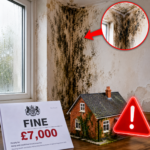
Landlords face £7,000 fines for damp and mould in government crackdown
3 months ago | 12 comments

Help for landlords against local authority fines and penalties
8 months ago | 2 comments
Not a member yet? Join In Seconds
Login with