

BR Investments: The trade most landlords never consider


Many landlords only start thinking about this when they are already in their 60’s and above, and by then, some of the options are already close to closing.
The recent Property118 landlord survey revealed that many established landlords have very low LTV’s across their rental property portfolios, and some have no borrowing at all, but is that equity actually doing anything useful?” In many cases, it isn’t; it’s just sitting there while a future inheritance tax bill builds in the background.
Whole of Life insurance in trust is one option, but some people are uninsurable. Many landlords are over-exposed to property because that’s all they know. That’s why they rarely seek advice about diversification from a regulated whole of market IFA, but that’s a mistake.
The trade most landlords never consider
Let’s keep this simple.
You have £1,000,000 of equity sitting in your portfolio.
Left untouched, that £1,000,000 could face a 40% inheritance tax charge.
That is potentially a £400,000 problem, and likely a growing one.
Most landlords accept that as “something for later”, whereas others with an open mind might ask: “What happens if I borrow against that equity and reposition it?”
This is where Business Relief (BR) starts to become relevant, because certain investments into qualifying trading businesses such as Octopus can fall outside your estate for inheritance tax purposes after a two-year holding period. The investment remains accessible during your lifetime, meaning you’re not giving money away; you are repositioning it.
IMPORTANT NOTE: This is not an invitation to invest, nor is it to be regarded as financial advice or a recommendation of Octopus Investments. The purpose of this article is financial education.
Why some landlords are funding BR investments through borrowing
Rather than using existing cash, some landlords refinance part of their portfolio and use the capital released to fund Business Relief qualifying investments.
That may sound counterintuitive at first; why risk taking on debt to invest into something other than property?
The answer sits in the balance between cost and outcome.
The objective isn’t necessarily for the investment to outperform the cost of borrowing, even though it may be possible in some cases. Instead, the objective is to remove a 40% inheritance tax exposure on that capital after two years, and viewed through that lens, the decision is less about yield and more about liability management.
What this can achieve in practice
Used carefully, this approach can begin to reshape exposure to IHT over time because a portion of the estate becomes more liquid, part of the inheritance tax exposure starts to reduce after two years and yet the property portfolio itself remains intact. It also creates optionality if circumstances change because the arrangements could be reversed by cashing in the investment and paying debt back down.
This is not without risk
It is important to be clear that this is not a risk-free strategy. Borrowing introduces ongoing cost and lender considerations while Business Relief investments carry capital risk, and qualification depends on the nature of the underlying businesses at the time. This is not about replacing one certainty with another; it’s about deciding which risks you are more comfortable managing.
An invitation for established landlords
If you find the Property118 articles helpful and are curious about how those ideas apply to your own portfolio, you are welcome to take the conversation a step further.
These conversations are typically most useful for landlords with established portfolios and relatively modest borrowing who are beginning to reflect on how their assets could work more effectively in the years ahead.
BOOK A CONSULTATION
|
★★★★★
|
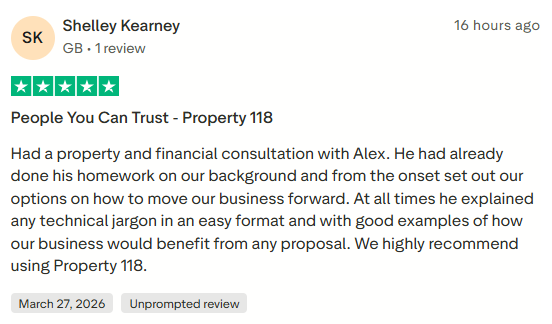
Help other landlords find Property118If you have found Property118 useful, a short Trustpilot review would make a meaningful difference. It helps other landlords decide whether our research is worth following. |

Be the first to comment
Your experience could help the next reader
Have you dealt with something similar? Share what you learned, raise a question or offer a perspective your peers may find useful.
Previous Article
Renters’ Rights Act: risk minimisationNext Article
Letting agent supplying contractors?
Not a member yet? Join In Seconds
Login with