

16) When borrowing at 5% to make 10% no longer feels as straightforward as it once did


For many landlords, one of the simplest ideas underpinning their portfolio strategy was always this; borrow at one rate, invest at a higher one, and allow the difference to compound over time. In earlier years that principle often felt relatively easy to apply. Borrowing costs and deposits required were different, rental yields were stronger in relative terms, and capital growth provided an additional layer of confidence that the overall return would justify the risk. The numbers did not need to be perfect; the direction of travel was usually enough. Borrow at 5%, achieve returns something closer to 10%, and the portfolio gradually took care of itself.
Today, many landlords feel that equation has become less certain.
When the gap begins to narrow
Over time, changes in lending markets, taxation and operating costs have altered the balance between borrowing and return. Interest rates have moved, tax treatment has evolved and costs associated with managing property have increased in ways that were not always anticipated during the earlier years of portfolio building. None of these changes necessarily undermine the long-term case for property investment. They do, however, make the relationship between borrowing and return feel less straightforward than it once did, and for some landlords, that creates hesitation.
The natural response many landlords have
When the perceived margin between borrowing costs and returns narrows, many investors instinctively become more cautious. New acquisitions may slow, refinancing decisions may be approached more conservatively, and the focus may shift toward preserving what has already been built rather than expanding further. In many situations that is entirely rational, yet for landlords with mature portfolios, the conversation is often slightly different.
The position of the mature portfolio
Experienced landlords with long-established portfolios are rarely approaching borrowing decisions from the same position as someone acquiring their first or second property. Borrowing levels may already be modest, equity may be more substantial, and income is likely to be more stable. In other words, the portfolio has moved beyond the stage where each decision is driven purely by acquisition opportunity. At that point, borrowing itself can begin to take on a different role within the overall strategy of the business.
The questions that begin to emerge
When landlords look at borrowing through the lens of a mature portfolio, a different set of questions often arises.
Is borrowing still being viewed purely as a cost, or also as a strategic tool?
Does the portfolio’s existing equity create options that were not available during the early years?
Is the relationship between borrowing and return being assessed in the right context?
Could the portfolio be working harder without increasing overall risk in the way many assume?
These questions rarely arise during the growth phase of a portfolio. Instead, they tend to appear later, once the landlord has already built a substantial base of assets.
Why this stage is often misunderstood
It is easy to assume that higher borrowing always means higher risk, and that lower borrowing automatically represents a safer position. In many situations that assumption holds true, yet mature portfolios can behave differently from smaller, more highly geared portfolios. The presence of significant equity, stable income and long-term ownership can create a context in which borrowing decisions are not simply about cost, but about how the portfolio functions as a whole. This is not a question of taking on unnecessary risk; it is a question of understanding how the existing structure of the portfolio influences the choices available.
The conversation many landlords eventually have
We increasingly find that experienced Property118 readers begin to revisit this topic once their portfolio reaches a certain stage of maturity. The original principle still makes sense. Borrowing at one rate and achieving a higher return remains a compelling idea. The difference is that the context has changed. The portfolio is no longer being built, it is being managed, shaped and considered in terms of its long-term role. At that point, the relationship between borrowing and return often becomes more nuanced than it first appears.
An invitation for established landlords
If you have built a substantial portfolio and are beginning to question how borrowing should fit into the next phase of your property business, we would be happy to take a look at your position.
BOOK A CONSULTATION
These conversations tend to be most useful for landlords with established portfolios and relatively modest borrowing who are beginning to reflect on how their assets could work differently in the years ahead.
|
★★★★★
|
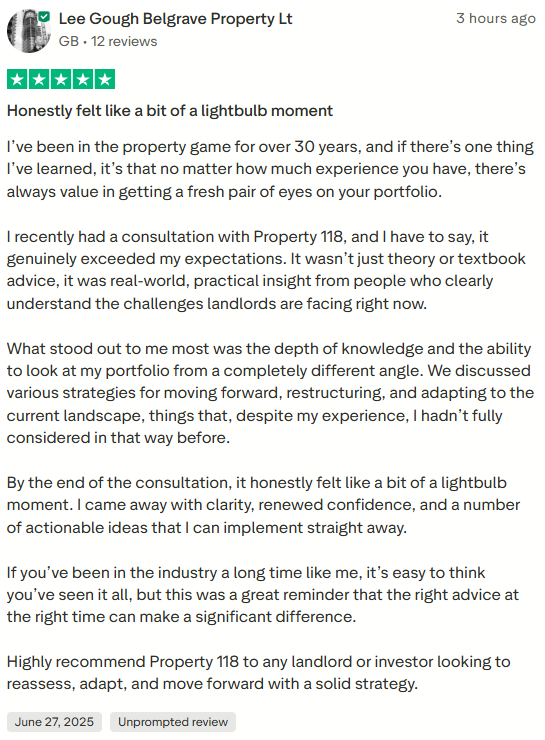
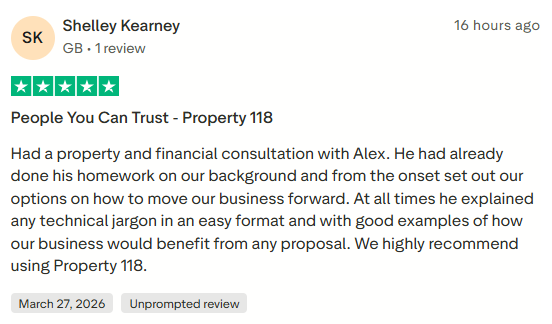
Help other landlords find Property118If you have found Property118 useful, a short Trustpilot review would make a meaningful difference. It helps other landlords decide whether our research is worth following. |
1 comment on this article
Learn from your peers’ experience
A different perspective could help you spot an issue, avoid a mistake or find a better way forward. Read the comments and add your own views if you wish.
Member Since January 2024 - Comments: 436
10:56 AM, 5th May 2026, About 6 months ago
It is difficult to make 10% in the London area. A house I have barely makes 2.5% BEFORE agent’s fees and expenses. There isn’t even growth at more than inflation at the moment. And of course CGT applies to inflation driven growth.
I am selling up and investing in other areas eg tracker funds. Much easier and lower risk.