

18) When a portfolio holds substantial equity but the income does not reflect it


Many landlords spend years building equity into their property portfolio. Property values increase over time, the overall financial position strengthens, and on paper, the portfolio becomes increasingly valuable. For many experienced Property118 readers, this process has been unfolding for decades.
The result is often a portfolio with substantial equity and relatively modest borrowing, and at first glance, that appears to be the ideal position, yet it can also give rise to a different question:
Why does the level of income not always seem to reflect the level of wealth?
The difference between equity and income
Equity and income behave in very different ways within a property portfolio. Equity tends to accumulate over time; it reflects past performance, capital growth and perhaps even the gradual reduction of borrowing.
Income, on the other hand, is shaped by returns on the current value of capital locked into the business as a whole, financing costs and the day-to-day operation of the portfolio.
It is entirely possible for a landlord to have built significant equity while the income generated by the portfolio remains relatively modest in comparison. This is particularly common in long-held portfolios where the LTV has reduced significantly over time.
When the question begins to surface
At a certain stage, many landlords begin to notice this imbalance. The portfolio looks strong on paper, the assets have performed well, the equity position is reassuring, yet the income produced by those assets may not fully reflect that strength. That is often the moment when a different line of thinking begins to emerge.
Is the equity within the portfolio simply sitting there?
Should it be playing a more active role?
Is the current income profile a reflection of the assets, or of how they are structured?
Could the portfolio behave differently without fundamentally changing the underlying properties?
These are not questions that tend to arise during the early years of building a portfolio, they usually appear later, once the assets are already established.
Why equity is often left untouched
There is a natural tendency to view equity as a sign that the portfolio is secure. For some, low borrowing somehow feels safer, and high equity feels like progress. After years of careful management, many landlords are understandably reluctant to revisit decisions that have brought them to that position. In many situations that caution is entirely justified, yet mature portfolios can sometimes reach a stage where the role of equity is never reconsidered after the initial growth phase has ended. The assets continue to perform, but the structure surrounding them remains largely unchanged.
The difference between preservation and utilisation
Holding equity and using equity are not the same thing. Preservation focuses on maintaining the value that has already been created, whereas utilisation considers how that value might influence the future behaviour of the portfolio. For some landlords, preservation is entirely appropriate, but for others, the question becomes whether the existing structure fully reflects the potential of the assets that have been built over many years. This is where the conversation often becomes more nuanced.
The stage many landlords recognise
We increasingly see experienced Property118 readers reaching a point where they begin to look at their portfolio through this lens. The properties themselves are familiar, the equity position is strong, borrowing is modest, yet curiosity lies in how those elements interact. Landlords begin to ask whether the portfolio’s income profile truly reflects the strength of the underlying assets, or whether it simply reflects decisions made during an earlier stage of the journey.
An invitation for established landlords
If you have built a substantial portfolio and are beginning to question how the equity within your portfolio is working for you, we would be happy to take an initial look at your position.
Enquire about a free initial discussion with a Property118 consultant
From there we can arrange a free introductory discussion to explore how your portfolio is structured and what that might mean for the years ahead.
These conversations tend to be most useful for landlords with established portfolios and relatively modest borrowing who are beginning to reflect on how their assets could work more effectively in the years ahead.
|
★★★★★
|
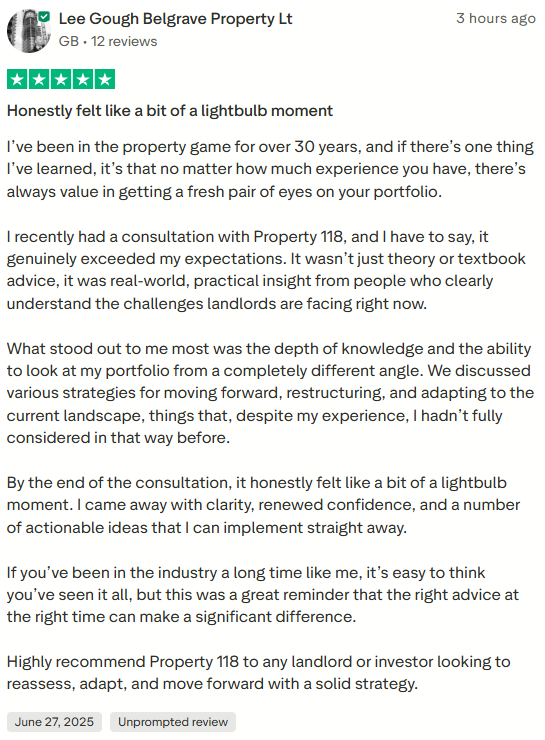
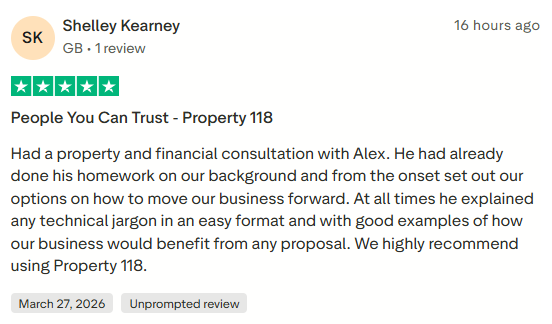
Help other landlords find Property118If you have found Property118 useful, a short Trustpilot review would make a meaningful difference. It helps other landlords decide whether our research is worth following. |
Have Your Say
Every day, landlords who want to influence policy and share real-world experience add their voice here. Your perspective helps keep the debate balanced.
Not a member yet? Join In Seconds
Login with