

14) The moment many experienced landlords realise they are asking the same questions


One of the interesting things about working with established landlords is how often the same moment eventually appears. The portfolio is not in difficulty the properties perform well, borrowing is manageable, and the business has been operating successfully for many years. From the outside it looks like a straightforward example of long-term investing done properly, yet at some point the landlord begins asking a slightly different set of questions. These questions rarely arrive suddenly; they tend to appear gradually, usually after the portfolio has already reached a level of stability that would have felt remarkable during the early years. What is surprising is how often those questions turn out to be remarkably similar.
The quiet stage many landlords eventually reach
Property portfolios evolve slowly. Over twenty or thirty years a landlord might acquire properties under several different lending environments, several different tax frameworks and several different phases of their own life. Each decision along the way made sense at the time. A purchase opportunity appeared, a refinancing arrangement suited the circumstances, a property was added because the numbers worked. Eventually those decisions accumulate into a portfolio that represents decades of thoughtful investing. It is usually at that stage that landlords begin to pause and look at the business slightly differently.
The questions that appear again and again
When experienced landlords step back from the operational details of their portfolio, certain questions often begin to surface.
Is the portfolio organised in the most effective way for the future?
How easily could the business adapt if priorities changed?
Would someone else be able to understand how the portfolio works?
Does the structure reflect the stage of life the landlord has now reached?
These are not questions about buying the next property or negotiating the next mortgage; they are questions about the long-term direction of a portfolio that has already been built.
Why many landlords assume their situation is unique
Because every portfolio has its own history, many landlords assume that their circumstances must be entirely unique. The properties were acquired at different times, lending arrangements may vary between assets, and ownership structures may reflect decisions made many years earlier. From the inside, the portfolio can appear highly individual, but what often surprises landlords is that when portfolios reach a certain stage of maturity, many of the underlying themes begin to repeat. The details differ, but the patterns are remarkably familiar.
What experience begins to reveal
After reviewing many portfolios over the years, it becomes possible to recognise certain structural patterns that appear repeatedly among long-term investors. These patterns do not mean something is wrong. In most cases they are simply the natural outcome of building a portfolio over a long period of time while the surrounding environment continues to evolve. Tax rules change, lending markets shift, personal priorities develop, and families grow. The portfolio that emerges after decades of investing often reflects all of those stages simultaneously.
Why an outside perspective can sometimes help
When landlords have managed their portfolio personally for many years, the structure surrounding the assets often becomes very familiar. That familiarity is valuable. It reflects deep knowledge of how the business operates, yet familiarity can also make it harder to see the wider patterns that have gradually formed over time. Sometimes a fresh perspective simply helps bring those patterns into view. Once the portfolio is examined as a complete system rather than a collection of individual properties, the strategic conversation often becomes much clearer.
The stage where curiosity replaces urgency
Interestingly, the landlords who begin these conversations are rarely those under pressure. More often they are investors whose portfolios are already working well. The income is stable, the borrowing is modest and the properties have proven themselves over many years. The motivation is not crisis; it is curiosity about how the portfolio might behave in the decades ahead.
An invitation for established landlords
If you have built a substantial portfolio and recognise some of these questions beginning to appear, we would be happy to take a look at your position.
BOOK A CONSULTATION
These conversations tend to be most useful for landlords with established portfolios and relatively modest borrowing who are beginning to reflect on how their assets could work differently in the years ahead.
In the next article, I will explain what typically happens when we examine a landlord’s portfolio for the first time and why the first conversation often centres on understanding the structure rather than the properties themselves.
|
★★★★★
|
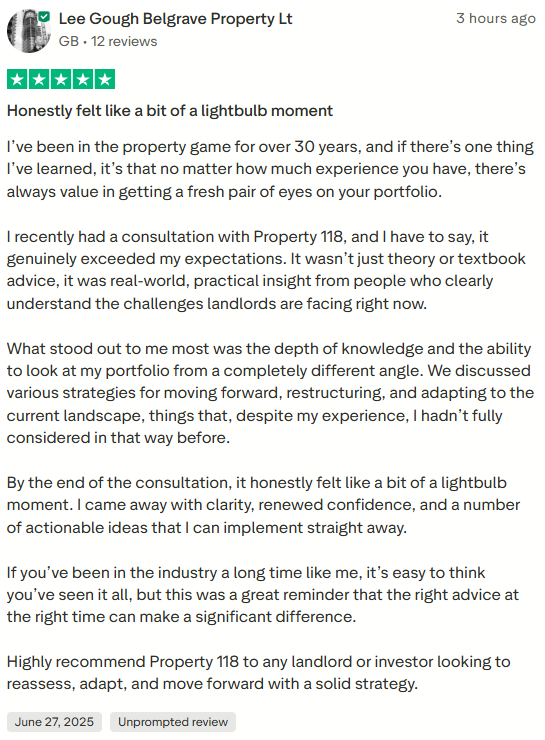
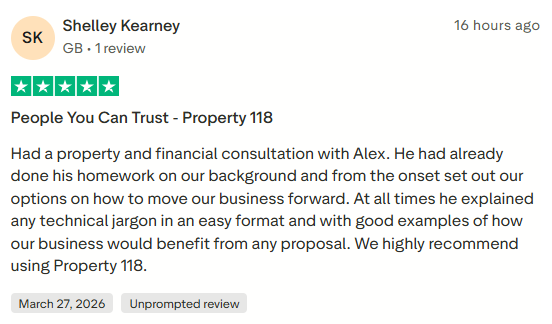
Help other landlords find Property118If you have found Property118 useful, a short Trustpilot review would make a meaningful difference. It helps other landlords decide whether our research is worth following. |
Be the first to comment
Your experience could help the next reader
Have you dealt with something similar? Share what you learned, raise a question or offer a perspective your peers may find useful.
Not a member yet? Join In Seconds
Login with