Privacy Policy
BACKGROUND:
Property118 Ltd understands that your privacy is important to you and that you care about how your personal data is used and shared online. We respect and value the privacy of everyone who visits this website,
www.property118.com (“Our Site”) and will only collect and use personal data in ways that are described here, and in a manner that is consistent with Our obligations and your rights under the law.
Please read this Privacy Policy carefully and ensure that you understand it. Your acceptance of Our Privacy Policy is deemed to occur upon your first use of Our Site
. If you do not accept and agree with this Privacy Policy, you must stop using Our Site immediately.
- Definitions and Interpretation
In this Policy the following terms shall have the following meanings:
| “Account” |
means an account required to access and/or use certain areas and features of Our Site; |
| “Cookie” |
means a small text file placed on your computer or device by Our Site when you visit certain parts of Our Site and/or when you use certain features of Our Site. Details of the Cookies used by Our Site are set out in section 13, below; |
| “Cookie Law” |
means the relevant parts of the Privacy and Electronic Communications (EC Directive) Regulations 2003; |
| “personal data” |
means any and all data that relates to an identifiable person who can be directly or indirectly identified from that data. In this case, it means personal data that you give to Us via Our Site. This definition shall, where applicable, incorporate the definitions provided in the EU Regulation 2016/679 – the General Data Protection Regulation (“GDPR”); and |
| “We/Us/Our” |
Means Property118 Ltd , a limited company registered in England under company number 10295964, whose registered address is 1st Floor, Woburn House, 84 St Benedicts Street, Norwich, NR2 4AB. |
- Information About Us
- Our Site is owned and operated by Property118 Ltd, a limited company registered in England under company number 10295964, whose registered address is 1st Floor, Woburn House, 84 St Benedicts Street, Norwich, NR2 4AB.
- Our VAT number is 990 0332 34.
- Our Data Protection Officer is Neil Patterson, and can be contacted by email at npatterson@property118.com, by telephone on 01603 489118, or by post at 1st Floor, Woburn House, 84 St Benedicts Street, Norwich, NR2 4AB.
- What Does This Policy Cover?
This Privacy Policy applies only to your use of Our Site. Our Site may contain links to other websites. Please note that We have no control over how your data is collected, stored, or used by other websites and We advise you to check the privacy policies of any such websites before providing any data to them.
- Your Rights
- As a data subject, you have the following rights under the GDPR, which this Policy and Our use of personal data have been designed to uphold:
- The right to be informed about Our collection and use of personal data;
- The right of access to the personal data We hold about you (see section 12);
- The right to rectification if any personal data We hold about you is inaccurate or incomplete (please contact Us using the details in section 14);
- The right to be forgotten – i.e. the right to ask Us to delete any personal data We hold about you (We only hold your personal data for a limited time, as explained in section 6 but if you would like Us to delete it sooner, please contact Us using the details in section 14);
- The right to restrict (i.e. prevent) the processing of your personal data;
- The right to data portability (obtaining a copy of your personal data to re-use with another service or organisation);
- The right to object to Us using your personal data for particular purposes; and
- If you have any cause for complaint about Our use of your personal data, please contact Us using the details provided in section 14 and We will do Our best to solve the problem for you. If We are unable to help, you also have the right to lodge a complaint with the UK’s supervisory authority, the Information Commissioner’s Office.
- For further information about your rights, please contact the Information Commissioner’s Office or your local Citizens Advice Bureau.
- What Data Do We Collect?
Depending upon your use of Our Site, We may collect some or all of the following personal data (please also see section 13 on Our use of Cookies and similar technologies):
- Name;
- Date of birth;
- Address and post code;
- Business/company name and trading status;
- Number of properties owned;
- Accountants details;
- Contact information such as email addresses and telephone numbers;
- Proof of residence and ID;
- Financial information such as income and tax status;
- Landlords insurance renewal dates;
- Property Portfolio details such as value and mortgage outstanding;
- How Do We Use Your Data?
- All personal data is processed and stored securely, for no longer than is necessary in light of the reason(s) for which it was first collected. We will comply with Our obligations and safeguard your rights under the GDPR at all times. For more details on security see section 7, below.
- Our use of your personal data will always have a lawful basis, either because it is necessary for our performance of a contract with you, because you have consented to our use of your personal data (e.g. by subscribing to emails), or because it is in our legitimate interests. Specifically, we may use your data for the following purposes:
- Providing and managing your access to Our Site;
- Supplying our products and or services to you (please note that We require your personal data in order to enter into a contract with you);
- Personalising and tailoring our products and or services for you;
- Replying to emails from you;
- Supplying you with emails that you have opted into (you may unsubscribe or opt-out at any time by the unsubscribe link at the bottom of all emails;
- Analysing your use of our site and gathering feedback to enable us to continually improve our site and your user experience;
- Provide information to our partner service and product suppliers at your request.
- With your permission and/or where permitted by law, We may also use your data for marketing purposes which may include contacting you by email and or telephone with information, news and offers on our products and or We will not, however, send you any unsolicited marketing or spam and will take all reasonable steps to ensure that We fully protect your rights and comply with Our obligations under the GDPR and the Privacy and Electronic Communications (EC Directive) Regulations 2003.
- You have the right to withdraw your consent to us using your personal data at any time, and to request that we delete it.
- We do not keep your personal data for any longer than is necessary in light of the reason(s) for which it was first collected. Data will therefore be retained for the following periods (or its retention will be determined on the following bases):
- Member profile information is collected with your consent and can be amended or deleted at any time by you;
- Anti-Money Laundering information and tax consultancy records are to be kept as required by law for up to seven years.
- How and Where Do We Store Your Data?
- We only keep your personal data for as long as We need to in order to use it as described above in section 6, and/or for as long as We have your permission to keep it.
- Some or all of your data may be stored outside of the European Economic Area (“the EEA”) (The EEA consists of all EU member states, plus Norway, Iceland, and Liechtenstein). You are deemed to accept and agree to this by using our site and submitting information to Us. If we do store data outside the EEA, we will take all reasonable steps to ensure that your data is treated as safely and securely as it would be within the UK and under the GDPR
- Data security is very important to Us, and to protect your data We have taken suitable measures to safeguard and secure data collected through Our Site.
- Do We Share Your Data?
- We may share your data with other partner companies in for the purpose of supplying products or services you have requested.
- We may sometimes contract with third parties to supply products and services to you on Our behalf. Where any of your data is required for such a purpose, We will take all reasonable steps to ensure that your data will be handled safely, securely, and in accordance with your rights, Our obligations, and the obligations of the third party under the law.
- We may compile statistics about the use of Our Site including data on traffic, usage patterns, user numbers, sales, and other information. All such data will be anonymised and will not include any personally identifying data, or any anonymised data that can be combined with other data and used to identify you. We may from time to time share such data with third parties such as prospective investors, affiliates, partners, and advertisers. Data will only be shared and used within the bounds of the law.
- In certain circumstances, We may be legally required to share certain data held by Us, which may include your personal data, for example, where We are involved in legal proceedings, where We are complying with legal requirements, a court order, or a governmental authority.
- What Happens If Our Business Changes Hands?
- We may, from time to time, expand or reduce Our business and this may involve the sale and/or the transfer of control of all or part of Our business. Any personal data that you have provided will, where it is relevant to any part of Our business that is being transferred, be transferred along with that part and the new owner or newly controlling party will, under the terms of this Privacy Policy, be permitted to use that data only for the same purposes for which it was originally collected by Us.
- How Can You Control Your Data?
- In addition to your rights under the GDPR, set out in section 4, we aim to give you strong controls on Our use of your data for direct marketing purposes including the ability to opt-out of receiving emails from Us which you may do by unsubscribing using the links provided in Our emails.
- Your Right to Withhold Information
- You may access certain areas of Our Site without providing any data at all. However, to use all features and functions available on Our Site you may be required to submit or allow for the collection of certain data.
- You may restrict Our use of Cookies. For more information, see section 13.
- How Can You Access Your Data?
You have the right to ask for a copy of any of your personal data held by Us (where such data is held). Under the GDPR, no fee is payable and We will provide any and all information in response to your request free of charge. Please contact Us for more details at info@property118.com, or using the contact details below in section 14.
- Our Use of Cookies
- Our Site may place and access certain first party Cookies on your computer or device. First party Cookies are those placed directly by Us and are used only by Us. We use Cookies to facilitate and improve your experience of Our Site and to provide and improve Our products AND/OR We have carefully chosen these Cookies and have taken steps to ensure that your privacy and personal data is protected and respected at all times.
- All Cookies used by and on Our Site are used in accordance with current Cookie Law.
- Before Cookies are placed on your computer or device, you will be shown a cookie prompt requesting your consent to set those Cookies. By giving your consent to the placing of Cookies you are enabling Us to provide the best possible experience and service to you. You may, if you wish, deny consent to the placing of Cookies; however certain features of Our Site may not function fully or as intended. You will be given the opportunity to allow only first party Cookies and block third party Cookies.
- Certain features of Our Site depend on Cookies to function. Cookie Law deems these Cookies to be “strictly necessary”. These Cookies are shown below in section 13.5. Your consent will not be sought to place these Cookies, but it is still important that you are aware of them. You may still block these Cookies by changing your internet browser’s settings as detailed below in section 13.9, but please be aware that Our Site may not work properly if you do so. We have taken great care to ensure that your privacy is not at risk by allowing them.
- The following first party Cookies may be placed on your computer or device:
| Name of Cookie |
Purpose |
Strictly Necessary |
| JSESSIONID |
Used only to collect performance data, with any identifiable data obfuscated |
No |
| __cfduid |
This cookie is strictly necessary for Cloudflare's security features and cannot be turned off. |
Yes |
- Our Site uses analytics services provided by Google Analytics and Facebook. Website analytics refers to a set of tools used to collect and analyse anonymous usage information, enabling Us to better understand how Our Site is used. This, in turn, enables Us to improve Our Site and the products AND/OR services offered through it. You do not have to allow Us to use these Cookies, however whilst Our use of them does not pose any risk to your privacy or your safe use of Our Site, it does enable Us to continually improve Our Site, making it a better and more useful experience for you.
- The analytics service(s) used by Our Site use(s) Cookies to gather the required information.
- The analytics service(s) used by Our Site use(s) the following Cookies:
| Name of Cookie |
First / Third Party |
Provider |
Purpose |
| __utma, __utmb, __utmc, __utmt, __utmz |
First |
Google |
Helps to understand how their visitors engage with our website |
| _fbp |
First |
Facebook |
Helps to understand how their visitors engage with our website |
- In addition to the controls that We provide, you can choose to enable or disable Cookies in your internet browser. Most internet browsers also enable you to choose whether you wish to disable all cookies or only third party cookies. By default, most internet browsers accept Cookies but this can be changed. For further details, please consult the help menu in your internet browser or the documentation that came with your device.
- You can choose to delete Cookies on your computer or device at any time, however you may lose any information that enables you to access Our Site more quickly and efficiently including, but not limited to, login and personalisation settings.
- It is recommended that you keep your internet browser and operating system up-to-date and that you consult the help and guidance provided by the developer of your internet browser and manufacturer of your computer or device if you are unsure about adjusting your privacy settings.
- Contacting Us
If you have any questions about Our Site or this Privacy Policy, please contact Us by email at info@property118.com, by telephone on 01603 489118, or by post at 1st Floor, Woburn House, 84 St Benedicts Street, Norwich, NR2 4AB. Please ensure that your query is clear, particularly if it is a request for information about the data We hold about you (as under section 12, above).
- Changes to Our Privacy Policy
We may change this Privacy Policy from time to time (for example, if the law changes). Any changes will be immediately posted on Our Site and you will be deemed to have accepted the terms of the Privacy Policy on your first use of Our Site following the alterations. We recommend that you check this page regularly to keep up-to-date.





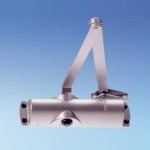











11:36 AM, 10th February 2013, About 11 years ago
Don't use Yale latches on doors in HMO's is the sImple solution. Fire doors in care homes is a totally different issue - not sure of the answer - maybe a magnetically operated hold open device?
Lynne Davis
13:28 PM, 10th February 2013, About 11 years ago
Can't you get thumb-turn locks that need to be locked with a key from the outside (like the cylinder locks for uPVC doors)?
20:54 PM, 10th February 2013, About 11 years ago
We use special security locks which essentialy are thumb locks, we never use chain based or Hydraulic systems. Their is a better option which has not been mentioned. In 5 years operation we have never had a tenant lock themselves out of their room or their house. In fact we had one tenant who could not figure out the one key system and called us up stating we had forgot to issue him his room key and he could not lock his room. Once we had informed him to go home and try the door key we never heard from him again....
Mark Alexander - Founder of Property118
20:59 PM, 10th February 2013, About 11 years ago
I have also posted this article to your HMO Facebook Page Ash, which by the way is also an excellent resource for HMO Landlords which I would stronly recommend them to "Like". Thanks for commenting on both threads. Link to Ash's Facebook page here >>> http://www.facebook.com/groups/housesofmultipleoccupancy/553989364620552/
Mary Latham
21:36 PM, 10th February 2013, About 11 years ago
I also use thumb turn locks which can be opened on the inside without a key, do not lock until you operate the thumb turn or with a key from the outside. The first benefit I found is that they cannot lock themselves out of the room nor do they forget their keys because they need them to lock the door on the way out. They come in both mortice and "yale" style locks. This has saved me many journeys to let them in.
I use the chain style closers called Perko and I have had them in my properties since the 80's. I have only had to replace 4 in all those years with 4/5 in each of several HMO properties.
I use thumb turn locks on all my doors including the final exit doors back and front and this means that if there were a fire and they had to get out in a rush they would not be searching for a key. They are quite expensive you they are often on an offer at some suppliers - worth Googling.
Follow me on Twitter @landlordtweets
12:08 PM, 11th February 2013, About 11 years ago
Here in Oxford the licensing authority no longer require self-closers on room doors although they still do on kitchen and or living room doors that isolate stairwells from high risk fire areas.
It transpires that the main driver for this shift in policy was to do with the level of complaints received by the noise team from neighbours who were disturbed by slamming doors at all hours of the day and night! Moral of the tale..........reducing complaints supersedes safety of tenants?
HMOLandlady
22:23 PM, 11th February 2013, About 11 years ago
Thanks for all the advice, everyone. I'll look into the thumb turns which mean you have to lock them from the outside. It's a constant learning curve.......!
Mark Alexander - Founder of Property118
3:20 AM, 12th February 2013, About 11 years ago
Svetlana and I stayed in one of our flats this weekend. It was only then I realised these are the locks my brother has fitted to all of our flats.
Richard Lord
20:48 PM, 15th March 2013, About 11 years ago
I feel the need to add to the debate from the position of requiring 30 minutes self closing fire doors in the first place as they are not a requirement in all HMO bedrooms. The Housing Act 2004 does not require fire doors in all HMO's - the requirement to provide a protected route is on a risk based approach. It may be worth reading the national safety guidance carefully to establish whether you really need fire resisting doors with self closers in the first place. Not knowing whether the HMO is a three storey bedsit type or a two storey shared house type licensed HMO as part of an additional scheme it is hard to make a specific comment. For example the following general comments are lifted out of the fire safety guidance.- In existing 3 storey shared houses of low risk it may be possible to accept existing walls and partitions if 20 minutes fire resistance can be achieved. -If the management is good, the tenants present an average or lower risk and the house is of a conventional layout you may not need a 30 minute protected route. You may need to challenge your LA's standards to ask them to justify why they are requiring self closing 30 minutesfire doors
Freda Blogs
10:12 AM, 16th March 2013, About 11 years ago
I was required by the Local Authority to install a self closing fire door to the kitchen of my 2 storey 4 bed student house - at some considerable expense. I knew it would never be left closed (and I think the Council rep secretly agreed), and so it has proved. It is always left wedged open....no amount of telling, wedge removal or notices put up seem to work.